
why local bait?
Because where your bait comes from matters.
Live baitfish can travel hundreds or even thousands of miles before they reach a bait bucket. Moving live fish between regions can also move unwanted species, parasites and pathogens.
Keeping bait closer to home cuts one long-distance pathway for those organisms while keeping live bait available to anglers.
THE BAIT BUCKET STARTS LONG BEFORE THE BOAT RAMP
The United States produces more than one billion baitfish a year. Many are raised on large aquaculture farms and shipped far from where they were produced.
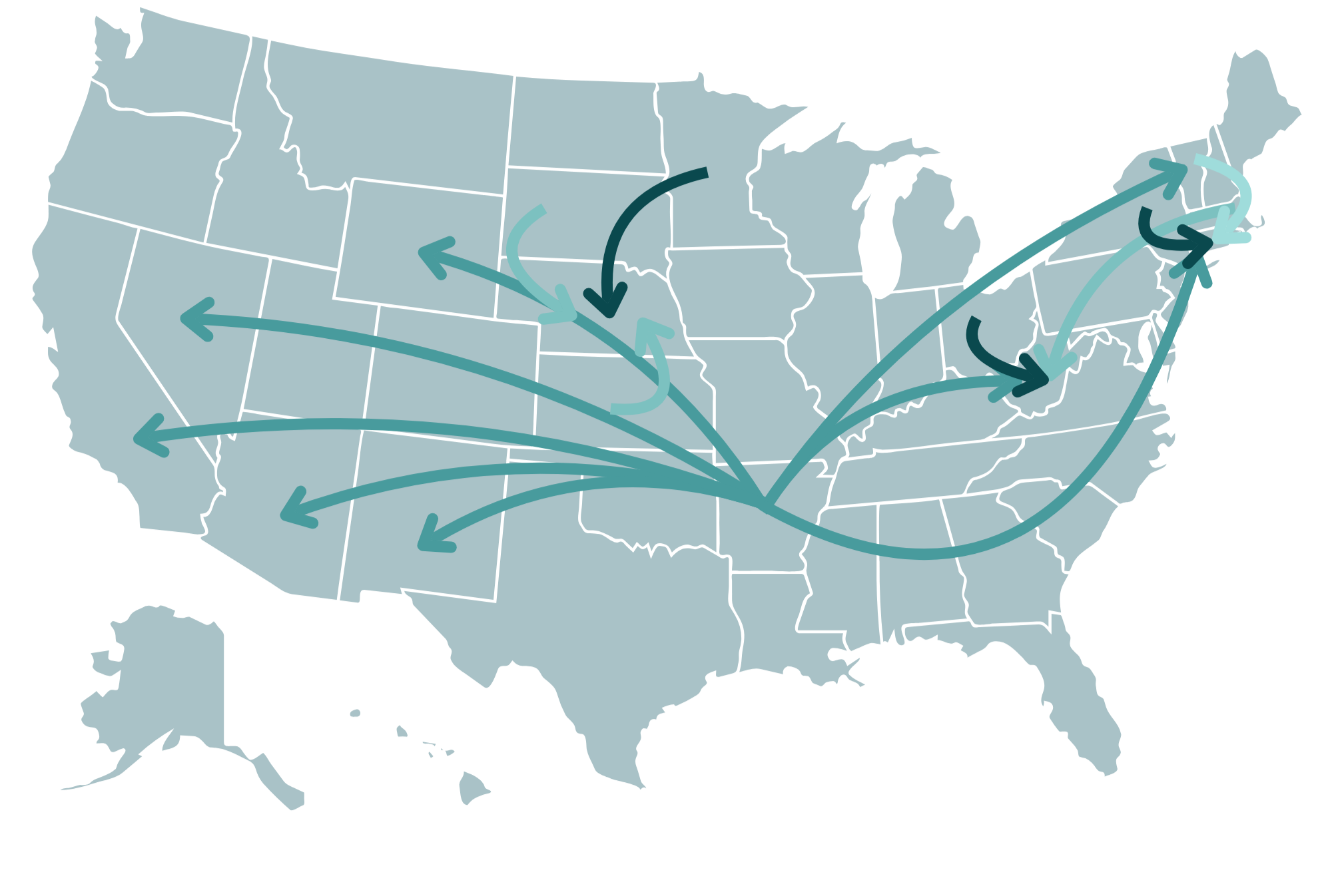
A nationwide review of state government records documented at least 39.3 million live baitfish crossing state lines from 2022 through 2024, plus 746 additional transport events where the number of fish was not recorded.
A large share of the documented trade originated in just a few states. Arkansas alone supplied baitfish to at least 19 states.
Those records are incomplete. Some states keep detailed shipment data; others keep very little or none at all. 39.3 million is a documented minimum, not the full size of the trade.
39.3 million
live baitfish documented crossing state lines in three years.
WHAT CAN COME ALONG FOR THE RIDE?
Studies of commercial baitfish have found non-target fish, invasive species, parasites and viral and bacterial pathogens in bait sold in the United States. In one Michigan study, the invasive Asian fish tapeworm was detected in 53% of the retail baitfish lots sampled. Other studies have found invasive fish mixed into bait and viruses in baitfish sold through retail shops.
A species does not have to be intentionally sold as bait to move through the supply chain. Small fish and other organisms can be mixed into a shipment, while parasites and pathogens may not be visible at all.
Once a new invasive species or disease becomes established in a lake or river, controlling it can be difficult, expensive or sometimes impossible. Prevention is the safer bet.
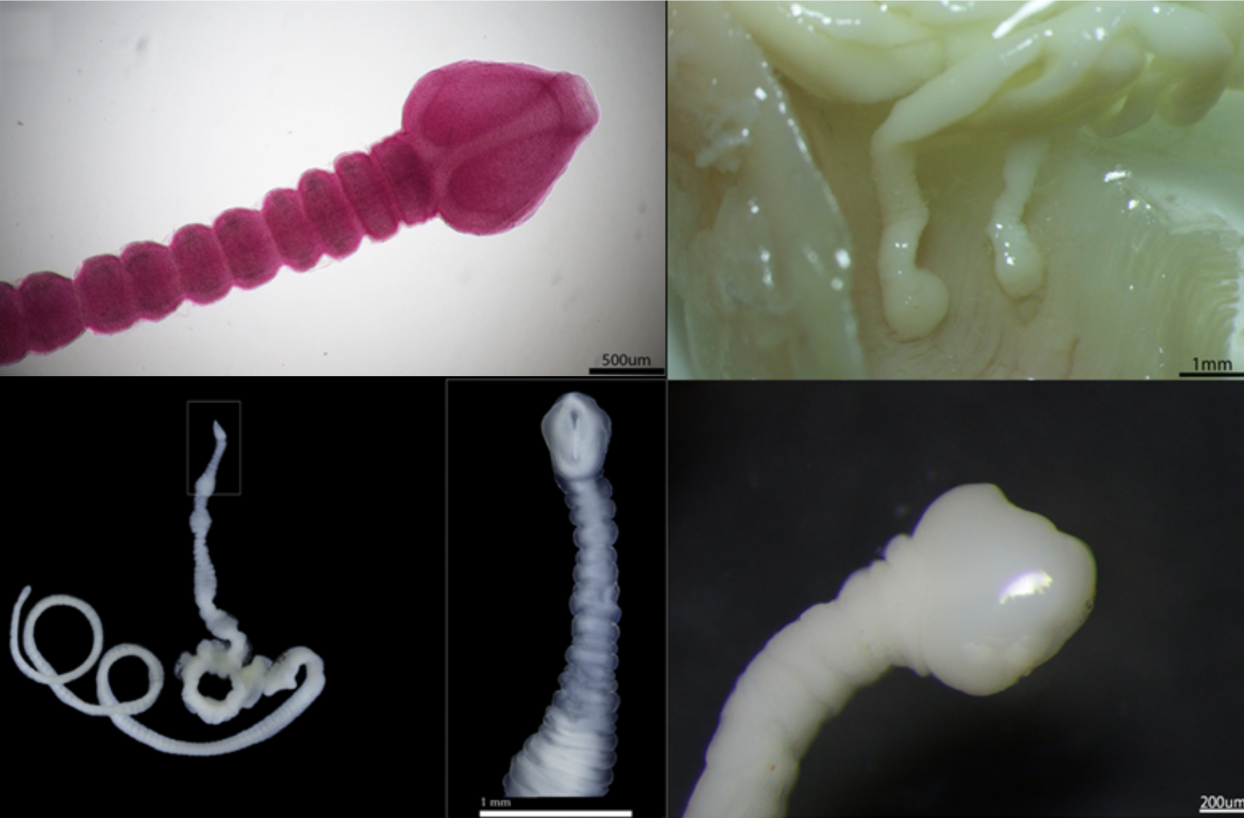
Asian fish tapeworm (Schyzocotyle acheilognathi). Adapted from Rave et al. (2025), CC BY 4.0.
Your Questions, Answered
-
Often, yes. Fish-health requirements, farm inspections, and certification programs all help reduce risk. But they don’t make every shipment risk-free.
A Minnesota Department of Natural Resources risk assessment found that Arkansas’ certification program did not address every identified invasive-species and pathogen risk, and recommended keeping Minnesota’s live-minnow import prohibition in place.
-
Yes. The goal is not to end live-bait fishing.
Where live bait is legal, states can keep it available while limiting the long-distance movement of baitfish. Locally produced bait can still be sold, and anglers may also be able to harvest their own bait under state rules.
-
No, stronger baitfish rules do not appear to drive people away from fishing. A peer-reviewed study comparing fishing participation before and after live baitfish restrictions in Maine, New York, Vermont, and Colorado found no detectable decline in fishing participation following the restrictions.
-
Maine, Minnesota and Montana have already moved to in-state live baitfish supplies. The details differ from state to state, but the basic idea is simple: keep live bait closer to where it will eventually be used.
WHAT DOES GOING LOCAL ACTUALLY CHANGE?

Local bait eliminates the highest-risk pathway for invasive species at the source.

Your bait dollars stay closer to home, supporting local family farms and local jobs.

The waters you love today stay fishable for the next generation.
Keep your home waters local.
Ask your bait shop where its live bait comes from. Choose locally raised or locally harvested bait when it’s available. And always follow your state's rules for transporting and disposing of bait.
Small changes can make a big difference.
SOURCES & FURTHER READING
We believe in verifiable, peer-reviewed science. Sources for all key claims above can be verified in the following scientific publications and government reports.
-
DeRooy, V. & Hansen, A. (2026). Live fish highway: Uncovering the pathways that move millions of minnows across the United States.
United States Department of Agriculture. (2024). 2022 Census of Agriculture: 2023 Census of Aquaculture.
-
Mulligan, H., Schall, B. J., Davis, T. & Coulter, A. A. (2023). Opportunities for regional collaboration and prevention: Assessing the risk of the live bait trade as a pathway of invasive species.
McEachran, M. C., Mor, S. K. & Phelps, N. B. D. (2021). Detection of pathogens and non-target species in the baitfish supply chain.
Snyder, M. R. et al. (2020). Detecting aquatic invasive species in bait and pond stores with targeted environmental (e)DNA high-throughput sequencing metabarcode assays: Angler, retailer, and manager implications.
Stepien, C. A., Snyder, M. R. & Elz, A. E. (2019). Invasion genetics of the silver carp Hypophthalmichthys molitrix across North America: Differentiation of fronts, introgression, and eDNA metabarcode detection.
Boonthai, T. et al. (2018). Retail baitfish in Michigan harbor serious fish viral pathogens.
Boonthai, T. et al. (2017). The Asian fish tapeworm Schyzocotyle acheilognathi is widespread in baitfish retail stores in Michigan, USA.
Marcogliese, D. J. (2008). First report of the Asian fish tapeworm in the Great Lakes. Journal of Great Lakes
Heckmann, R. A., Greger, P. D. & Furtek, R. C. (1993). The Asian fish tapeworm, Bothriocephalus acheilognathi, in fishes from Nevada.
Mahon, A. R., Horton, D. J., Learman, D. R., Nathan, L. R. & Jerde, C. L. (2018). Investigating diversity of pathogenic microbes in commercial bait trade water.
Boonthai, T. et al. (2017). The Asian fish tapeworm Schyzocotyle acheilognathi is widespread in baitfish retail stores in Michigan, USA.
Nathan, L. R., Jerde, C. L., Budny, M. L. & Mahon, A. R. (2015). The use of environmental DNA in invasive species surveillance of the Great Lakes commercial bait trade.
Mahon, A. R., Nathan, L. R. & Jerde, C. L. (2014). Meta-genomic surveillance of invasive species in the bait trade.
McCann, R. L. (2012). Viral survey of fathead minnows, golden shiners, and white suckers from baitfish dealers in Wisconsin.
DiStefano, R. J., Litvan, M. E. & Horner, P. T. (2009). The bait industry as a potential vector for alien crayfish introductions: Problem recognition by fisheries agencies and a Missouri evaluation.
-
Gunderson, J. (2018). Minnow Importation Risk Report: Assessing the Risk of Importing Golden Shiners into Minnesota from Arkansas.
American Fisheries Society–Fish Health Section. (2014). FHS Blue Book: Suggested Procedures for the Detection and Identification of Certain Finfish and Shellfish Pathogens.
Dean, E. M. et al. (2024). America’s Most Wanted Fishes: Cataloging risk assessments to prioritize invasive species for management action.
Agency of Natural Resources. (2018). VT Fish & Wildlife Responds to Baitfish Violation.
-
Diagne, C. et al. (2020). InvaCost, a public database of the economic costs of biological invasions worldwide.
Crystal-Ornelas, R. et al. (2021). Economic costs of biological invasions within North America.
-
DeRooy, V. & Hansen, A. (2025). Mapping the landscape of live baitfish regulations for aquatic invasive species prevention in the United States.
Kerr, S. J. (2012). The Management of Bait in Ontario: A Review.
Gunderson, J. (2018). Minnow Importation Risk Report: Assessing the Risk of Importing Golden Shiners into Minnesota from Arkansas.
-
DeRooy, V. & Hansen, A. (2024). Untangling the impact of live baitfish restrictions on recreational fishing participation in the United States.
-
Gallardo, B., Clavero, M., Sánchez, M. I. & Vilà, M. (2016). Global ecological impacts of invasive species in aquatic ecosystems.
Nagy, R., Fusaro, A., Conard, W. & Morningstar, C. (2026). Procambarus clarkii (Girard, 1852): Red Swamp Crayfish Species Profile.
Gunderson, J. (2018). Minnow Importation Risk Report: Assessing the Risk of Importing Golden Shiners into Minnesota from Arkansas.